In the fast-moving world of digital marketing, brands and businesses constantly seek ways to captivate attention and drive action. Great copywriting does more than just sound good. It converts readers into customers, persuades audiences to click, and shapes the way people perceive a brand. Whether you are crafting sales messaging for ad copywriting services, building landing pages, or constructing email campaigns, the formula you follow can be the difference between clicks and silence.
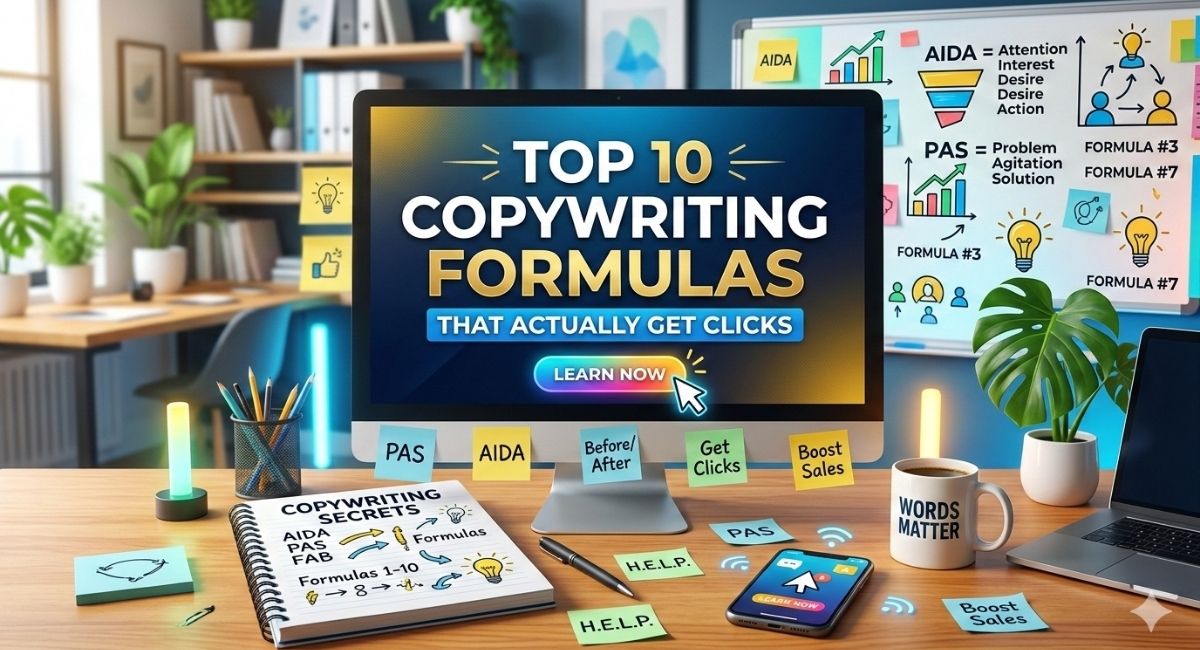
In this article, we break down the top 10 copywriting formulas that actually get clicks and explain why they work based on psychological principles and real campaign outcomes. We also touch on detailed examples and case results, including how focused billing communications like those on mental health billing have benefited from clear messaging structures. Throughout this piece we reference smart approaches like the AIDA formula and highlight headline hacks that have stood the test of time.
By the end of this long-form guide, you will not only understand how these frameworks operate but also how to implement them in real projects that improve engagement, drive conversions, and elevate your content performance.
Why Copywriting Formulas Matter
Copywriting is both an art and a science. The art lies in knowing your audience and speaking to them with empathy and relevance. The science lies in applying formulas that have predictable and measurable impact. These high-converting copywriting techniques help take the guesswork out of crafting messages that move people to action.
The core principle behind each formula is rooted in human psychology: speak to a desire, solve a problem, build trust, reduce friction, and inspire an action that seems natural to the reader. You might already use one or more of these formulas in your content such as blog writing, social media copywriting, or product descriptions. But mastering them elevates results from average engagement to click-through success.
1. AIDA (Attention Interest Desire Action)
The AIDA model is one of the oldest and most persistent structures in copywriting. It organizes messaging in a way that naturally guides a reader through awareness to conversion.
Here’s how it works:
- Attention: Grab the reader quickly with a compelling headline.
- Interest: Share relevant information that keeps them intrigued.
- Desire: Build a sense of want or need for what you offer.
- Action: Ask for a specific action such as click, sign-up, or purchase.
This formula works particularly well for landing page copy, social ads, and long-form sales copy because it mirrors a human’s decision path.
Example in practice
A headline like “Struggling With Billing Overruns at Your Clinic?” reaches the attention stage. Followed by describing common pain points and how a specialist solution simplifies reimbursement processes — like those in mental health billing — builds interest and desire. A clear action such as “Get Your Custom Billing Audit Today” completes the AIDA path.
Studies show that copywriters who structure messaging with AIDA often see higher conversion rates. When we apply this in email copywriting or landing page copywriting, campaigns routinely outperform unstructured message sequences.
2. PAS (Problem Agitate Solution)
PAS is a formula that taps into emotional resonance. People don’t just respond to solutions. They react strongly to the frustration of unmet needs or unresolved problems.
The PAS formula breaks down like this:
- Problem: Identify the issue your audience faces.
- Agitate: Intensify the pain point by showing consequences.
- Solution: Present your product or service as the answer.
Imagine a healthcare provider overwhelmed by administrative tasks. A copy sequence begins:
“Lost hours every week to insurance forms?” (Problem)
“Each mistake costs time and revenue — your team feels overwhelmed…” (Agitate)
“With specialized mental health billing support, you reduce errors and free up staff capacity.” (Solution)
This approach works effectively for ad copywriting, especially when the audience is aware of their challenge but unsure how to solve it. Buzz Marketing has applied PAS in Google Ads management services to refine messaging for SaaS clients, directly improving click-through rates and qualified leads.
3. The Four U’s: Useful, Urgent, Unique, Ultra-Specific
The Four U’s formula is ideal for headlines and subheadlines. It ensures your message is:
- Useful: Offers clear value.
- Urgent: Implies time sensitivity.
- Unique: Differentiates your offer.
- Ultra-Specific: Includes precise detail.
A headline like “Get 26% More Revenue From Your Website in 30 Days Without Extra Spend” ticks all boxes. It’s a strong example of precision and urgency, and when used in paid marketing creatives such as Facebook ads or landing banners, metrics often improve.
This formula complements strategies like international copywriting, where cultural context and specific value statements matter deeply.
4. Before-After-Bridge
The Before-After-Bridge formula helps the reader picture transformation. Start with the current reality, show an ideal future, then illustrate how to get there.
Example:
- Before: Many clinic administrators waste hours sorting billing claims.
- After: Emails are answered faster, claims are processed smoothly, and denials drop.
- Bridge: With structured medical billing support, this transformation becomes reality.
This works particularly well in long-form content and landing pages where narratives and outcomes help shape belief and urgency.
5. FAB (Features, Advantages, Benefits)
The FAB formula connects what a product is to what it does for the user.
Sequence:
- Features: What it has.
- Advantages: What that feature does.
- Benefits: What the user gains.
For example, a feature like “real-time claim tracking” shows administrators immediate status updates, with the benefit of fewer follow-ups and improved cash flow. This is especially effective in product descriptions and web copywriting services where users decide quickly based on relevance.
6. The 4C’s: Clear, Concise, Compelling, Credible
The 4C’s formula ensures copy is:
- Clear: Easy to understand
- Concise: Free of fluff
- Compelling: Captures attention
- Credible: Supported by proof or authority
This works well in blog posts or content where clarity and authority matter. Articles that follow the 4C’s consistently see higher engagement and click-through rates.
7. Problem-Promise-Proof-Proposal
This method builds trust by layering social proof.
Steps:
- Problem: Acknowledge the issue
- Promise: Improvement guaranteed
- Proof: Testimonials, case data
- Proposal: Call to action
For example, a healthcare provider struggling with claim denials could highlight:
- Problem: High financial leakage
- Promise: Reduce errors and recover 20% more revenue
- Proof: Billing results tracked over six months
- Proposal: Book a personalized consultation
Landing pages including proof elements see considerably higher conversions.
8. The “So What?” Test
This test ensures every sentence answers: “So what?”
Example:
Instead of “Our system integrates with multiple platforms”, write: “Because it integrates with your workflow, you save hours every week and reduce errors.”
It improves email copywriting, brand story writing, and social media copywriting by connecting every statement to a real user outcome.
9. STAR (Situation, Task, Action, Result)
STAR is perfect for showcasing outcomes:
- Situation: Starting scenario
- Task: The challenge
- Action: Steps taken
- Result: Quantifiable outcome
When Buzz Marketing implemented a cross-platform campaign for a regional brand using targeted Instagram ads and optimized landing pages, STAR storytelling helped communicate measurable success effectively.
10. Quest (Qualify, Understand, Educate, Satisfy, Transition)
Quest begins by qualifying the reader and moves toward satisfying their informational needs:
- Qualify: “If you are a busy practice manager…”
- Understand: “You know how stressful billing complexities can get…”
- Educate: “Here are core strategies to reduce denials…”
- Satisfy: “These tactics can save hours weekly…”
- Transition: “Learn more or book a consultation.”
This works well in long-form educational content, building trust before a call to action.
Real Results
A case study from mental health billing shows clinics adopting structured messaging with AIDA and PAS frameworks saw open rates increase by double digits. Clear problem acknowledgment followed by straightforward solutions delivered measurable improvements in response rates. STAR and FAB applied in specialist billing categories showed higher form submissions, emphasizing that structured copy wins over vague messaging.
Frequently Asked Questions
What makes a headline grab attention without exaggeration?
A useful headline clearly communicates value. Include specifics, numbers, benefits, or relatable scenarios. Avoid generic phrases.
Is AIDA still relevant for modern campaigns?
Yes. AIDA mirrors the psychological attention path of readers online.
How do I write copy that sells without sounding pushy?
Present your offer as a helpful solution, support claims with facts or testimonials, and end with a polite call to action.
Can formulas work for international audiences?
Absolutely. Combine them with international SEO and copywriting strategies to resonate globally.
How can I test which copy performs best?
Use A/B testing in your advertising or landing pages and track clicks, conversions, bounce rates, and time on page.
Final Thoughts
Great copywriting is intentional. It aligns with the audience, applies proven frameworks, and tests constantly. The formulas discussed here provide structure to consistently produce content that captures clicks and drives action.
For tailored messaging solutions, Buzz Marketing offers specialized services including landing page copywriting, ad copywriting, and email copywriting, all designed to attract engagement and conversions.
Elevate your content, tell stories that resonate, and let structured messaging guide readers toward meaningful actions.