Medical billing companies operate in a space where competition is not just about pricing or service quality, but also about visibility at the exact moment providers are searching for help. Clinics, hospitals, and specialty practices now rely heavily on search engines when choosing revenue cycle partners. That shift has made SEO one of the most consistent ways to generate qualified inbound leads.
Unlike outbound outreach, SEO brings decision-makers who are already looking for solutions such as claim denial reduction, credentialing support, coding accuracy, or full revenue cycle management. When structured properly, SEO becomes a predictable client acquisition system rather than a traffic source.
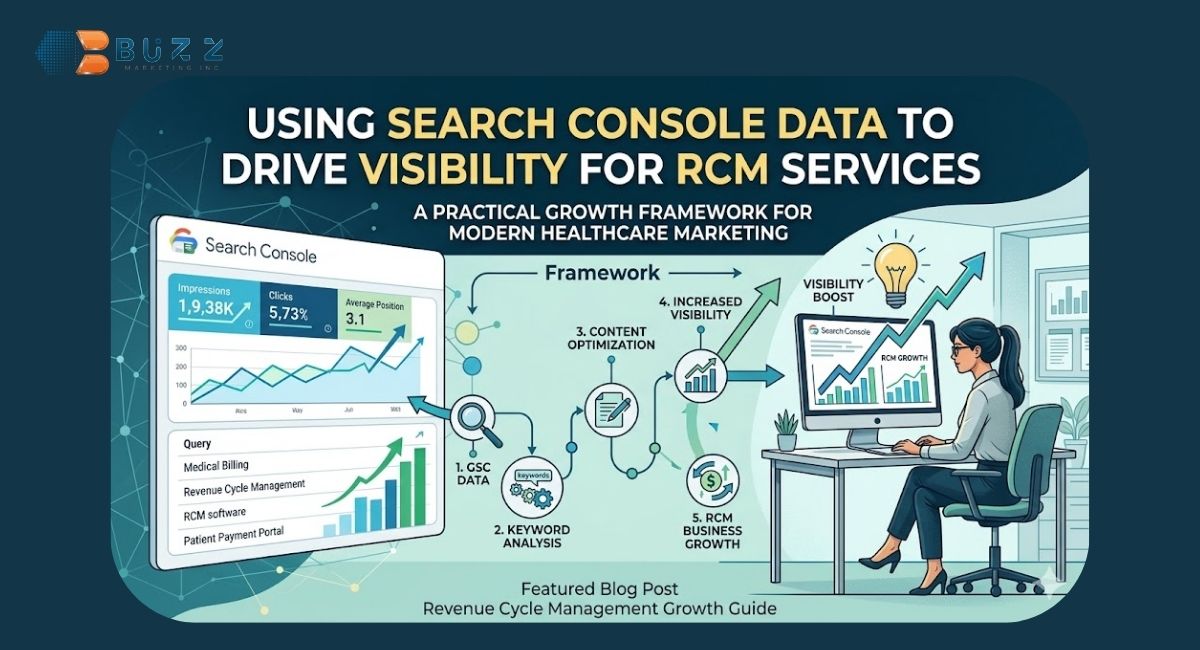
This guide explains how medical billing companies can build a strong lead generation engine using SEO, supported by content strategy, technical improvements, conversion systems, and real-world campaign patterns. It also includes practical references from industry-focused insights such as SEO strategies for healthcare RCM companies and tracking keyword growth in medical billing, which show how search visibility directly connects to client inquiries when implemented correctly.
Why SEO Has Become the Core Lead Channel for Medical Billing Companies
Healthcare outsourcing decisions are no longer made only through referrals or offline networks. Most providers now begin their search online, comparing multiple billing companies before reaching out.
Search queries often include:
- medical billing outsourcing services
- RCM company for small practices
- reduce claim denials billing support
- medical coding and billing services provider
These are not casual searches. They reflect active buying intent. A clinic searching for billing help is usually facing operational pressure such as delayed reimbursements, rising denials, or staffing gaps.
SEO helps capture this demand at different decision stages:
- Awareness: learning about billing challenges
- Consideration: comparing service providers
- Decision: requesting proposals or consultations
Companies that structure their SEO around these stages consistently generate higher-quality inbound leads compared to those focusing only on ranking pages.
How SEO Works as a Medical Billing Client Acquisition System
SEO in medical billing is not just content publishing. It functions as a structured funnel where every page plays a role in guiding a visitor toward inquiry.
A simplified flow looks like this:
Search Query → Educational Content → Service Page → Contact Form → Client Conversion
To make this system effective, three layers must work together:
1. Traffic Layer
This includes blogs, keyword-focused articles, and educational guides targeting billing-related searches.
2. Trust Layer
This includes case studies, compliance pages, and specialty expertise content.
3. Conversion Layer
This includes service pages, CTAs, and inquiry forms optimized for healthcare decision-makers.
For example, structured service architecture like medical billing services helps convert informational visitors into direct inquiries by clearly explaining value and scope.
Keyword Strategy That Drives Qualified Leads in Medical Billing SEO
Keyword selection determines the quality of leads more than traffic volume.
Instead of targeting broad terms only, successful billing companies build layered keyword systems:
High-Intent Keywords
- medical billing company for clinics
- revenue cycle management services
- healthcare billing outsourcing partner
Problem-Based Keywords
- how to reduce claim denials
- improve billing accuracy in clinics
- fix delayed insurance payments
Specialty Keywords
- cardiology billing services
- mental health billing outsourcing
- internal medicine billing solutions
A strong example of how niche keywords improve targeting can be seen in healthcare RCM SEO insights where specialty-focused optimization led to higher inquiry quality from providers.
Content Strategy That Converts SEO Traffic Into Clients
Medical billing SEO fails when content is created only for ranking and not for conversion. A structured content system ensures every article supports lead generation.
Core content types that work best:
- Service pages (conversion-focused)
- Educational blogs (traffic generation)
- Case studies (trust building)
- Industry guides (authority building)
A practical example of structured content planning is shown in SEO marketing services where content clusters are designed to guide users from search to inquiry.
Content Funnel Structure
| Stage | Content Type | Purpose |
| Awareness | Blogs | Attract traffic |
| Consideration | Guides | Build trust |
| Decision | Service pages | Generate leads |
You May Also Like Reading: US medical billing company growth case study.
Without this structure, traffic remains informational and rarely converts into clients.
Technical SEO Factors That Impact Lead Generation
Even strong content fails if technical SEO is weak. Medical billing websites require stable infrastructure because healthcare decision-makers expect fast, secure, and well-structured platforms.
Key technical elements:
- Mobile-first website structure
- Fast loading speed
- Clean URL architecture
- Schema markup for services
- Secure HTTPS configuration
Technical performance directly impacts conversion rates. Even a 2–3 second delay can reduce inquiry submissions significantly.
Improvements such as those discussed in website speed optimization services help ensure users stay engaged long enough to convert.
Conversion Optimization: Turning SEO Visitors Into Billing Clients
Traffic without conversion strategy does not generate revenue. Conversion optimization ensures visitors understand services clearly and take action.
Key conversion elements:
- Clear service messaging on landing pages
- Industry-specific language for healthcare providers
- Short inquiry forms with minimal friction
- Strong internal linking to service pages
- Trust signals like compliance and experience
For example, conversion rate optimization services help improve how visitors interact with billing service pages and increase inquiry submissions without increasing traffic.
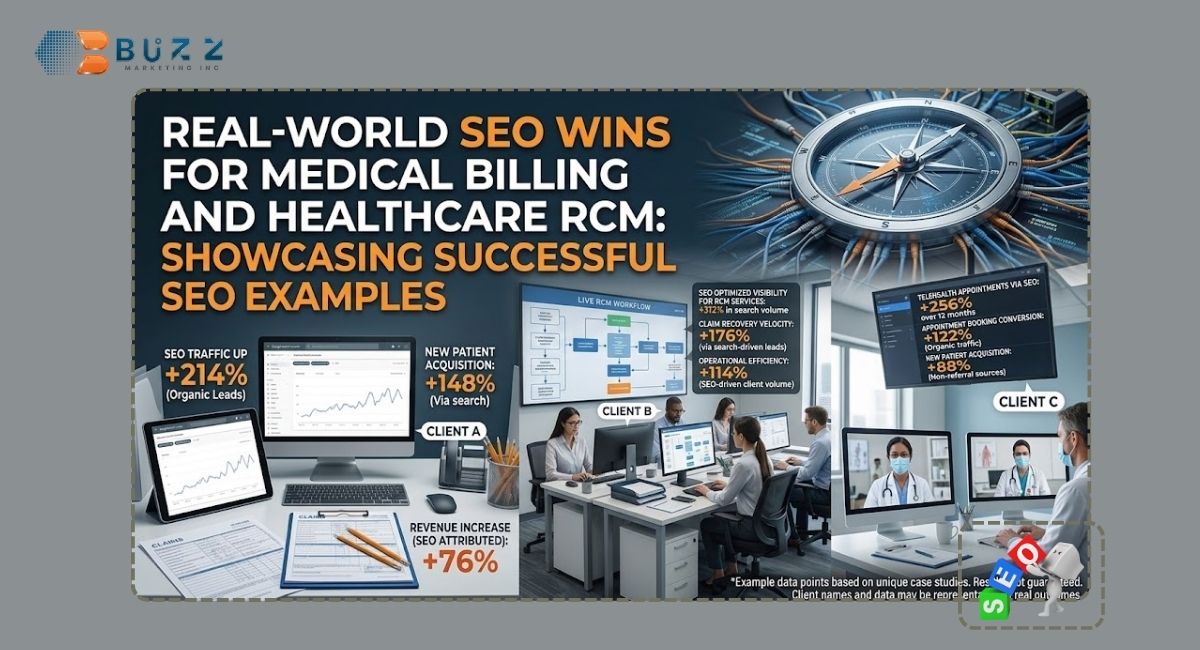
Real Case Studies: SEO Impact on Medical Billing Lead Generation
Case Study 1: Specialty Billing Firm Expansion
A mid-sized billing company offering services across internal medicine and cardiology faced inconsistent inbound leads. Their website had content but lacked structure.
SEO Actions Taken:
- Built specialty-focused landing pages
- Strengthened internal linking between blogs and services
- Optimized on-page SEO for billing keywords
- Improved blog content targeting denial reduction topics
Supporting insights were aligned with tracking keyword growth in medical billing to identify high-intent search terms.
Outcome:
- Steady increase in qualified organic leads
- Improved engagement on service pages
- Higher inquiry conversion rate from specialty clinics
Case Study 2: Startup Billing Company Building Organic Pipeline
A new medical billing company had limited marketing budget and relied heavily on referrals.
Strategy Applied:
- Published educational blogs on billing challenges
- Targeted problem-based keywords
- Strengthened local SEO signals
This approach followed principles similar to why small businesses should invest in SEO.
Outcome:
- First consistent inbound leads within months
- Reduced dependency on outbound sales
- Growth in consultation requests from small clinics
Case Study 3: Scaling Multi-State Billing Operations
An established billing company expanded into multiple regions and needed SEO to support growth.
Actions:
- Created location-based service pages
- Improved off-page SEO authority
- Strengthened technical website structure
They aligned their strategy with off-page SEO services to build domain authority across competitive markets.
Outcome:
- Improved rankings in multiple states
- Stronger inbound pipeline for enterprise clients
- Better visibility for regional searches
Common SEO Mistakes That Limit Lead Generation in Medical Billing
Many billing companies invest in SEO but fail to generate leads due to structural gaps.
Frequent issues include:
- Targeting keywords without intent mapping
- Weak or missing service pages
- Poor internal linking between blogs and services
- Lack of conversion-focused design
- Overly technical content that ignores client needs
These mistakes often result in high traffic but low inquiry volume.
Future Direction of SEO in Medical Billing Lead Generation
SEO for medical billing is evolving due to changes in search behavior and AI-driven ranking systems.
Key trends shaping the future:
- AI-assisted search summaries influencing visibility
- Stronger focus on entity-based SEO
- Increased importance of healthcare authority signals
- Voice search for healthcare outsourcing queries
- Higher demand for niche billing expertise content
Companies that adapt early to these trends will gain stronger visibility in competitive healthcare markets.
Final Perspective: Building a Predictable Lead Engine Through SEO
SEO is no longer just a marketing channel for medical billing companies. It is a structured system that connects provider intent with service delivery.
When keyword strategy, technical SEO, content architecture, and conversion optimization work together, SEO becomes a consistent source of qualified RCM leads.
Companies that integrate structured services like medical billing outsourcing solutions and support systems such as medical coding services and RCM recovery support tend to see more stable growth in inbound client acquisition.
For billing companies aiming to strengthen organic growth and improve lead quality, aligning SEO with healthcare search behavior is no longer optional. It is part of building a scalable revenue system.
To explore structured healthcare SEO and lead generation systems, visit our website for practical solutions designed for medical billing and revenue cycle companies.