In healthcare revenue cycle management, visibility is not just about ranking higher, it is about being present when hospitals, clinics, and billing teams actively search for solutions to fix revenue leakage, denial management, or billing inefficiencies. Most RCM companies struggle not because their services lack value, but because their digital footprint is not aligned with how search behavior actually works.
This is where data from Google Search Console becomes a decision-making tool rather than just a reporting dashboard. When used correctly, it can shape how RCM service providers position their offerings, refine keyword targeting, and improve organic lead quality. Many healthcare marketers overlook this and rely heavily on assumptions rather than real search performance data.
For example, insights from healthcare-focused SEO research like Healthcare RCM SEO Insights show that most organic traffic in this niche is driven by very specific intent-based queries such as “denial management solutions,” “medical billing outsourcing partner,” and “RCM software for hospitals.” These are not broad awareness keywords. They are decision-stage queries.
When combined with structured SEO execution such as professional SEO marketing services, Search Console becomes a performance intelligence system that connects visibility with revenue outcomes.
This article breaks down how to use Search Console data to improve visibility for RCM services using practical strategies, real-world case references, and actionable optimization frameworks grounded in measurable SEO behavior.
Why Search Console Matters for RCM Visibility More Than Traditional Analytics
Most RCM companies rely on surface-level analytics like traffic volume or page views. While these metrics show activity, they do not explain intent or conversion potential. Search Console fills this gap by revealing how users actually find your website through search queries.
In the healthcare billing and RCM ecosystem, this distinction matters more than in many other industries because search behavior is highly fragmented. A single service like denial management can be searched in multiple ways:
- denial management solutions for hospitals
- healthcare claims denial recovery services
- reduce claim rejections medical billing
- RCM denial analytics tools
Search Console connects all these variations to real impressions, clicks, and position data.
This makes it possible to identify which terms are actually driving visibility and which are only assumed to matter.
A strong technical foundation is required to ensure this data is accurate and actionable. Services like Technical SEO optimization ensure indexing, crawlability, and site structure are aligned with search engine expectations. Without this, Search Console data may reflect incomplete performance signals.
Another key advantage is historical trend tracking. Over time, RCM companies can see how keyword visibility changes as service pages evolve, content expands, or backlinks grow. This helps in connecting SEO efforts directly with lead generation outcomes instead of guessing impact.
Building a Search Console Framework for RCM Service Growth
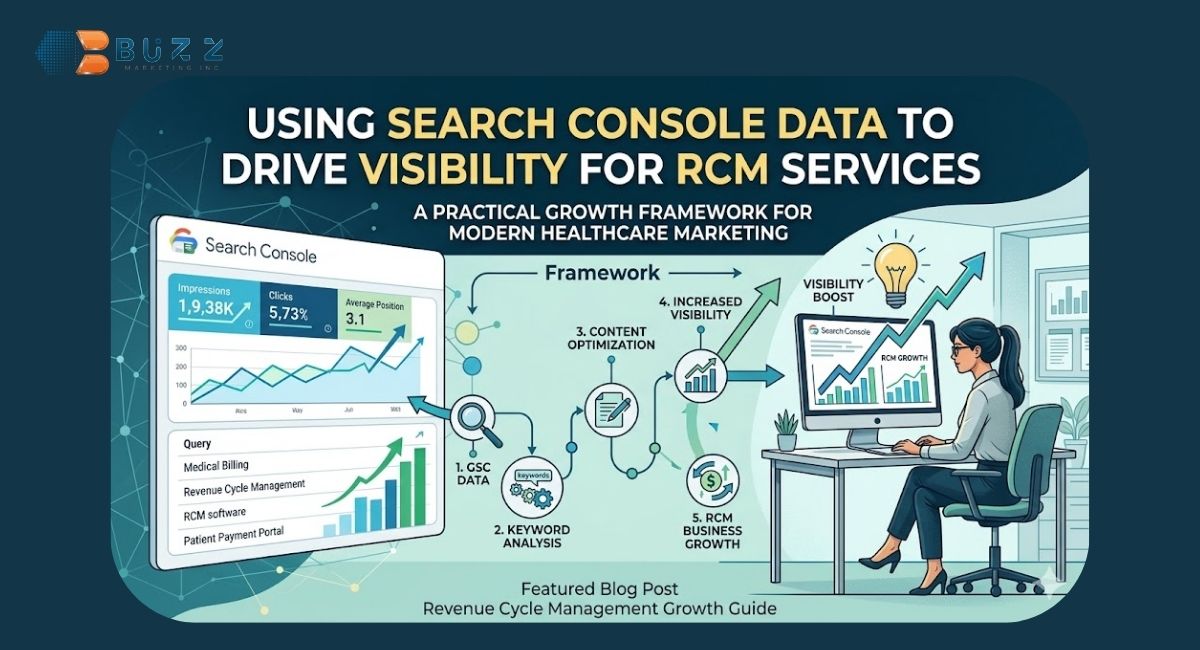
To effectively use Search Console for RCM visibility, it is important to structure data into meaningful layers rather than reviewing it as raw numbers. A practical framework involves breaking it into four key categories:
1. Query-Level Intent Mapping
Search Console reveals queries that bring users to your site. For RCM services, these queries often fall into three intent layers:
- Awareness stage: “what is revenue cycle management”
- Consideration stage: “RCM services for healthcare providers”
- Decision stage: “outsourced medical billing companies USA or UAE”
Mapping these helps align content with search intent rather than guessing topics.
For deeper keyword behavior insights, resources like Tracking keyword growth in medical billing explain how billing-related queries evolve over time and how long-tail terms outperform generic keywords in conversion.
2. Page Performance Alignment
Search Console also shows which pages are ranking for which queries. This is where many RCM websites find gaps.
For example:
- A blog post may rank for “medical billing outsourcing”
- But a service page may not appear at all for the same term
This signals a content-to-service mismatch. Fixing it often requires restructuring internal linking and improving page relevance signals.
3. Geographic Visibility Tracking
RCM services often target specific regions, especially for outsourcing contracts. Search Console allows segmentation of impressions by country and region.
When combined with insights from Geo vs SEO, it becomes clear that geographic intent is becoming more dynamic due to AI-driven search personalization. This means RCM companies must adjust their content not only for keywords but also for regional healthcare systems and compliance differences.
4. Device and Behavior Insights
Mobile vs desktop behavior matters even in B2B healthcare services. Decision-makers often research RCM providers on mobile but finalize contracts on desktop. Search Console helps track this behavioral split.
Understanding this allows marketers to optimize landing pages for different usage contexts.
Turning Search Console Data into RCM Visibility Strategy
Data alone does not improve rankings. Execution does. Once Search Console data is segmented, the next step is strategic application.
Refining Service Page Positioning
RCM service pages often fail because they are written from an internal perspective rather than search behavior.
For example:
Instead of writing “We provide revenue cycle solutions,” Search Console may reveal that users are searching:
- “end-to-end medical billing services for hospitals”
- “reduce claim denial rate healthcare outsourcing”
This shifts how service pages should be written and structured.
A well-optimized service structure, supported by SEO strategy development, ensures that each service aligns with real search patterns instead of internal terminology.
Strengthening Content Clusters
Search Console often shows keyword clusters around specific themes. For RCM, these clusters may include:
- denial management
- eligibility verification
- payment posting
- AR recovery services
Instead of creating isolated pages, building content clusters improves authority.
A supporting blog like SEO strategies for healthcare RCM companies highlights how structured content ecosystems improve topical authority over time.
Improving Click Through Rates Without Increasing Rankings
Sometimes RCM pages rank well but do not get clicks. Search Console reveals this gap clearly.
Common issues include:
- Weak titles not aligned with intent
- Missing trust signals
- Generic descriptions
Improving CTR often leads to higher visibility without ranking changes.
Professional SEO optimization practices, especially through structured SEO audit services, help identify these gaps systematically.
Case Study Insights from Healthcare RCM SEO Implementation
Real-world applications help validate how Search Console data impacts RCM visibility.
Case Study 1: Medical Billing Service Expansion
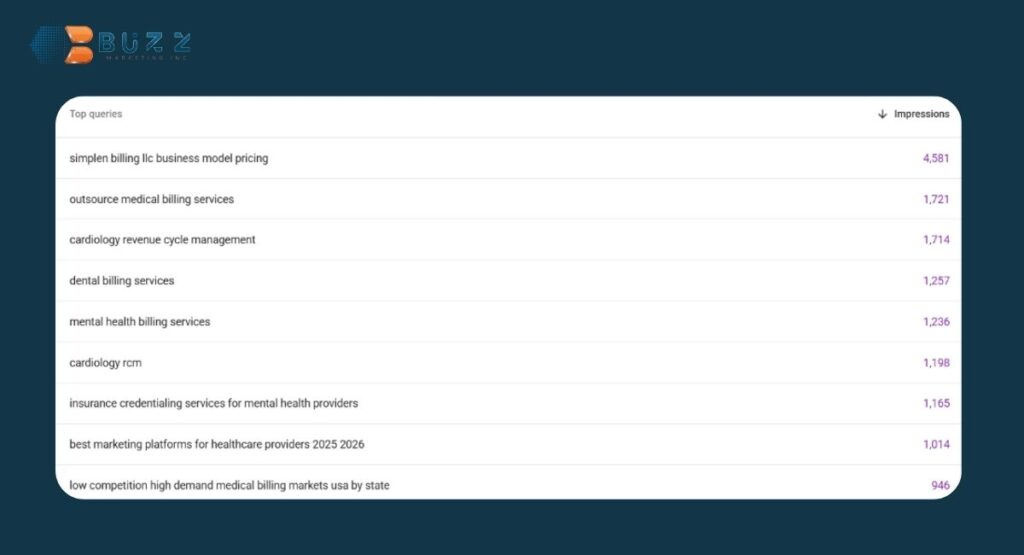
An RCM provider documented by eBridge RCM struggled with low organic visibility for its billing outsourcing services. Initial Search Console data showed high impressions but low clicks for terms like “medical billing company” and “RCM outsourcing partner.”
After restructuring service pages based on query intent and improving internal linking, the site saw:
- improved click-through rates on high-intent keywords
- better ranking distribution across long-tail queries
- increased visibility for denial management services
The key shift was not adding more content, but aligning content with Search Console query patterns.
Case Study 2: Denial Management Visibility Improvement
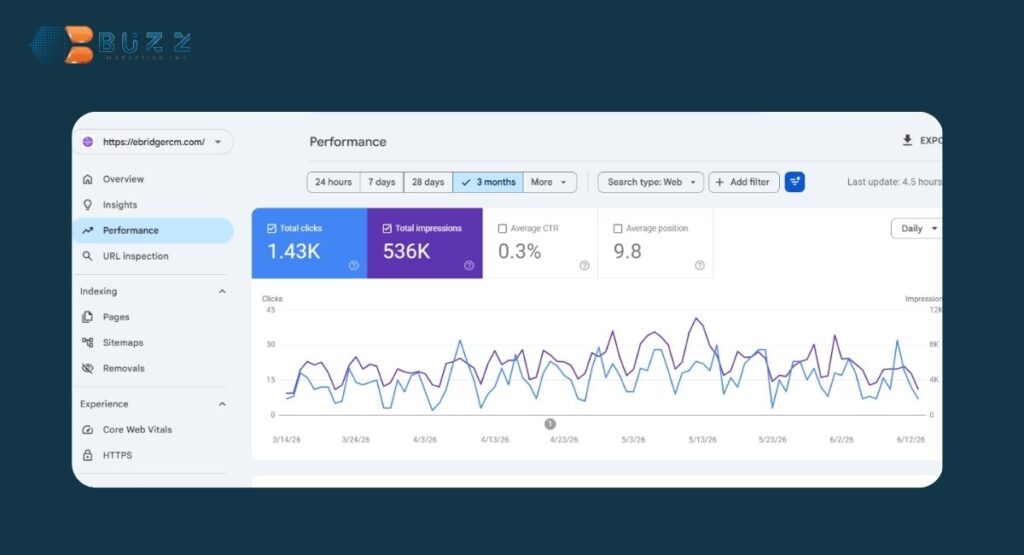
Another implementation referenced through eBridge RCM LLC focused on denial management solutions. Search Console revealed that users were not searching for “denial management software” as expected, but instead:
- “how to reduce claim denials in healthcare”
- “insurance denial recovery services”
After adjusting content strategy, organic traffic quality improved significantly, with higher engagement from hospital billing departments.
Case Study 3: Multi-Service RCM Positioning
A broader RCM service provider used Search Console segmentation to identify that different service lines were competing against each other in search results.
By restructuring pages and applying clearer keyword mapping, visibility improved across multiple service categories without increasing backlinks.
These examples show that Search Console is not just a reporting tool but a strategic planning system for RCM SEO execution.
Advanced Optimization Techniques for RCM Search Console Data
Once foundational improvements are made, advanced optimization becomes important for scaling visibility.
Query Expansion Strategy
Search Console often reveals partial data for queries. Expanding these into full keyword groups helps capture more traffic.
For example:
- “RCM services” expands into:
- RCM services for small hospitals
- healthcare RCM outsourcing companies
- revenue cycle management consulting
This expansion increases topical coverage.
Content Refresh Cycles
Instead of creating new pages constantly, updating existing high-impression pages based on Search Console data often delivers better results.
Internal Linking Optimization
Internal linking plays a critical role in how Search Console impressions convert into rankings.
For instance, linking supporting content from blogs like Digital marketing metrics to track weekly helps distribute authority across service pages.
Technical Optimization Layer
Search performance can also be limited by technical issues such as slow indexing or poor mobile rendering. Fixing these requires structured technical improvements like those offered through Technical SEO services.
Integrating Search Console Insights with Content and Copy Strategy
Search Console data becomes more powerful when combined with content strategy and messaging refinement.
Healthcare RCM services often suffer from overly technical messaging that does not match search intent. Aligning copy with real queries improves both engagement and ranking potential.
This is where professional copywriting systems such as web copywriting services help translate technical RCM services into search-aligned messaging.
Additionally, aligning content tone with behavioral search trends ensures better performance across both informational and transactional queries.
Frequently Asked Questions (FAQs)
1. How does Search Console help RCM companies improve visibility?
Search Console provides real search query data that shows how healthcare providers actually find RCM services, helping refine keyword targeting and content alignment.
2. What type of keywords perform best for medical billing services?
Long-tail, intent-driven keywords such as “RCM outsourcing for hospitals” or “denial management services” generally perform better than broad terms.
3. Can Search Console data improve lead quality?
Yes, because it reveals intent-based queries, which helps attract users who are closer to decision-making stages.
4. How often should RCM companies review Search Console data?
Weekly reviews are ideal for monitoring trends, while monthly analysis is better for strategic decisions.
5. Why do some RCM pages get impressions but no clicks?
This usually happens due to weak titles, misaligned intent, or lack of trust signals in search snippets.
6. Is technical SEO required for Search Console accuracy?
Yes, without proper indexing and site structure, Search Console data may not fully reflect real visibility.
Turning Search Console into a Growth Engine for RCM Services
Search Console is often treated as a passive reporting tool, but in the RCM industry it functions more like a behavioral map of healthcare search demand. It shows what providers, clinics, and billing teams are actively searching for, not what marketers assume they want.
When combined with structured SEO execution, technical improvements, and content alignment, it becomes possible to systematically increase visibility for high-value RCM services.
For organizations aiming to scale their healthcare SEO presence, aligning Search Console insights with strategic execution frameworks like SEO marketing services ensures that visibility translates into measurable business outcomes.
For more insights and structured digital growth support, Buzz Marketing continues to work on performance-driven SEO systems that connect search behavior with real revenue cycle improvements.
Explore more through Buzz Marketing resources at Buzz Marketing and align your RCM visibility strategy with data-backed SEO execution.