A customer in Karachi searches for “best dermatologist near DHA” on their phone. Google shows a map, three clinic names, ratings, and phone numbers right there on the results page. The customer taps a phone number and books an appointment. They never once visit the clinic’s website.
If you run a business and only measure success by website traffic, this entire interaction is invisible to you. The clinic won the customer. Your analytics dashboard shows nothing happened.
This is the reality of search today, and it is reshaping how businesses in Pakistan and everywhere else need to think about online visibility.
What a Zero-Click Search Actually Means
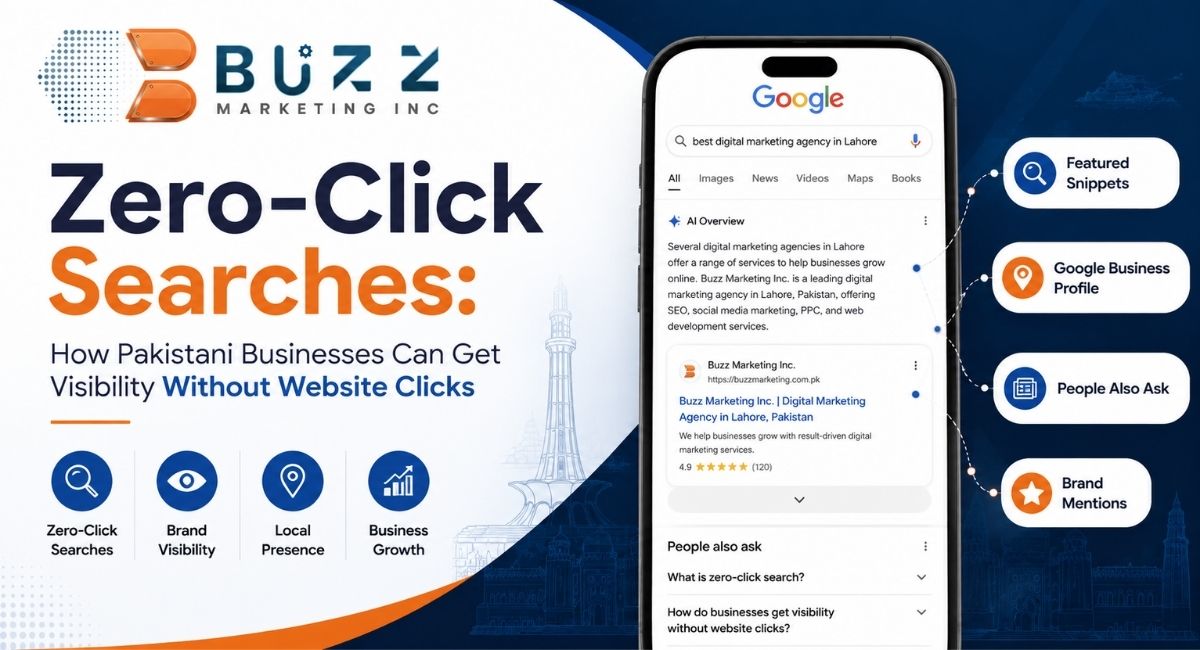
A zero-click search happens when a person gets the answer they need directly on the search results page, without clicking through to any website. Google Search now answers a large share of queries this way, using featured snippets, knowledge panels, local business listings, and increasingly, AI generated summaries.
This is not a temporary trend. It reflects a shift in how Google Search itself works. The platform has moved from being a directory that points people toward websites to being an answer engine that tries to resolve the query on the spot. Simple factual questions, business hours, phone numbers, definitions, and quick comparisons are now often answered without a single click.
For years, businesses measured search performance almost entirely through website sessions. That approach is becoming incomplete. A business can be highly visible in search, build trust with potential customers, and still show flat or declining website traffic, simply because the value is being delivered earlier in the search journey.
Why This Matters More for Businesses in Pakistan
Search behavior in Pakistan carries a few characteristics that make zero-click visibility especially relevant.
Mobile search dominates. A large share of searches in Pakistan happen on smartphones with limited data packages, where users often prefer quick answers over loading full websites. A restaurant’s phone number, a clinic’s location pin, or a shop’s opening hours displayed directly in search results saves the user time and data, and many will act on that information without ever opening a browser tab.
Local intent is common. Searches like “electrician near me,” “best mobile repair shop in Lahore,” or “affordable dentist Islamabad” are everyday queries. These searches are built for zero-click resolution through Google’s local pack, which displays a map along with top listings pulled largely from Google Business Profile.
Trust plays a bigger role in service based searches. When someone searches for a hospital, a lawyer, or a home service provider, they often want quick verification such as ratings, reviews, and contact details before committing to a call. A business that appears prominently in this zero-click layer, even without a website visit, gains credibility simply by showing up with strong information.
None of this means websites have become unnecessary. It means the website is no longer the only place value gets delivered. Businesses that only optimize for clicks are ignoring a growing share of the customer journey.
The Main Formats Where Zero-Click Visibility Happens
Several distinct search features drive zero-click outcomes, and each one requires a slightly different approach.
Featured Snippets
A featured snippet is the highlighted answer box that appears above regular search results, usually pulling a short paragraph, list, or table directly from a webpage. Featured snippets answer the query so completely that many users never scroll further.
Google AI Overviews
Google AI Overviews generate a synthesized answer using information pulled from multiple sources, often placed at the very top of the results page. Unlike a traditional snippet that quotes one source, an AI Overview blends and summarizes several. Businesses whose content is clear, well structured, and directly answers common questions are more likely to be referenced within these summaries.
Knowledge Panels
A knowledge panel appears on the right side of desktop search results or at the top on mobile, showing structured facts about a business, person, or entity. For a business, this often draws from a Google Business Profile along with structured data on the website.
Local Pack Listings
The local pack is the map based block showing three business listings for location based searches. This is one of the highest value zero-click placements for small and medium businesses, since it often shows contact details, hours, and a direct call button.
People Also Ask
The People Also Ask box shows a list of related questions that expand into short answers when clicked. While this technically involves a click, the answer often appears within the search results page itself rather than sending the user to an external site.
How Zero-Click Visibility Differs Across Formats
| Format | What Triggers It | What It Typically Shows |
| Featured Snippet | Clear, direct answer to a specific query | Short paragraph, list, or table pulled from one page |
| Google AI Overview | Broader or multi part questions | Summarized answer drawing from several sources |
| Knowledge Panel | Branded or entity based searches | Business facts, ratings, contact details |
| Local Pack | Location based service searches | Map, three listings, ratings, call button |
| People Also Ask | Related question expansion | Short answer plus source link |
How to Measure Visibility When Clicks Are Not the Metric
If clicks are no longer the full picture, businesses need a different set of signals to understand whether their search visibility is actually working.
Google Search Console remains the most useful free tool for this, even though it was built around click data. The impressions metric shows how often a page appeared in search results, regardless of whether it was clicked. A page with rising impressions but flat clicks is often a sign that it is winning visibility through a zero-click format such as a featured snippet or an AI Overview reference.
Comparing impressions against click through rate over time reveals patterns worth investigating. A sudden drop in click through rate alongside stable or rising impressions often means a query has started triggering a zero-click feature, pulling attention away from the traditional blue link.
Branded search volume is another useful signal. When a business gains visibility through local packs, knowledge panels, or AI summaries, people often search for the business by name afterward, even if they did not click through the first time. A steady rise in branded search queries, visible in Search Console, often points to zero-click exposure building brand recognition.
Google Business Profile insights add a layer specific to local visibility, showing how many people viewed a listing, requested directions, or called directly from the search results. For many local businesses, this data matters more than website analytics, since the entire customer interaction can happen without a site visit.
Practical Ways to Win Zero-Click Visibility
Winning visibility in zero-click formats requires a different content approach than writing for clicks alone. A few practices consistently help.
Structure content to answer questions directly and early. A paragraph that opens with a clear, concise answer to a specific question stands a better chance of being pulled into a featured snippet or referenced in an AI Overview than a paragraph that builds up to the answer gradually.
Use structured data markup where relevant, since schema helps search engines understand the exact meaning of content on a page, such as pricing, ratings, or frequently asked questions. This does not guarantee a featured snippet, but it improves the odds of being correctly interpreted and surfaced.
Keep a complete and accurate Google Business Profile. For businesses with a physical location or a defined service area, this single listing often has more influence over zero-click visibility than the website itself. Business hours, categories, photos, and regularly updated posts all contribute to how often a listing appears in local packs.
Answer real customer questions in dedicated sections. Reviewing actual questions customers ask through calls, WhatsApp, or reviews, and directly answering them in an FAQ section on relevant pages, increases the chance of being pulled into a People Also Ask box or an AI Overview citation.
Maintain consistency across platforms. Google Search, Google AI Overviews, and Bing all draw on structured signals from multiple sources. A business with matching name, address, and phone details across its website, Google Business Profile, and other directories builds a stronger entity profile, which supports knowledge panel and AI Overview eligibility.
A Practical Scenario
Consider a mid sized clothing brand in Lahore that sells through both a physical store and an online shop. The brand notices that impressions in Search Console are rising for queries like “how to style unstitched fabric” but clicks are staying flat. Rather than assuming the content is failing, the team checks whether the query is now triggering a featured snippet or an AI Overview. They find their competitor’s blog post is being pulled into the snippet because it opens with a direct, two sentence answer before expanding into detail.
The fix is not to abandon the content but to restructure it, moving the direct answer to the very top of the relevant section. Within a few weeks, their page starts appearing in the snippet instead. Website clicks for that specific query may still stay modest, but branded searches for the store name increase, and foot traffic to the physical location grows, a result that traditional click tracking alone would have missed entirely.
Metrics Worth Tracking Beyond Clicks
| Metric | What It Signals | Where to Track It |
| Search impressions | How often a page appears, regardless of clicks | Google Search Console |
| Click through rate trend | Whether a zero-click feature is absorbing attention | Google Search Console |
| Branded search volume | Awareness built through zero-click exposure | Google Search Console |
| Profile views and calls | Local visibility performance | Google Business Profile insights |
| Featured snippet ownership | Direct answer authority for target queries | Ahrefs or Semrush |
Some practical checks worth running on a regular basis include:
- Reviewing which queries show high impressions but low click through rate
- Checking whether competitors have taken over a featured snippet previously held by your page
- Confirming Google Business Profile details are accurate after any change in hours, address, or services
- Watching branded search volume for unusual spikes or drops after a visibility change
- Testing how a page’s content reads when read aloud as a direct answer, since this mirrors how AI summaries often extract information
Where Zero-Click Strategy Fits Alongside Traditional SEO
Zero-click visibility should not replace a broader search strategy. It works best as one layer within it. A business still needs a well built website, accurate technical foundations, and content that ranks for competitive terms where clicks genuinely matter, such as product pages or service pages designed to convert visitors.
Understanding how AI driven search results work is becoming a core part of this picture. A useful starting point is a review of answer engine optimization, which explains how content gets selected and referenced by AI powered search tools rather than just traditional ranking algorithms. Businesses weighing how much this shift changes their existing approach may also find it helpful to compare AI SEO against traditional SEO methods side by side, since the two are not interchangeable but do reinforce each other when applied together.
For businesses relying heavily on local visibility, a properly optimized Google Business Profile remains one of the highest return activities available. A detailed guide on Google My Business optimization covers the specific profile elements that influence local pack rankings and zero-click exposure for service based businesses.
Businesses operating outside major metro areas face a slightly different set of challenges, since search volume and competition patterns differ from cities like Karachi or Lahore. A closer look at local SEO strategies for tier two cities in Pakistan addresses how businesses outside the largest urban centers can still build strong zero-click visibility despite lower overall search volume.
Our local SEO services focus specifically on this kind of visibility, helping businesses strengthen their Google Business Profile presence and local pack rankings rather than treating website traffic as the only measure of success.
Adapting Content for AI Powered Search Results
Google AI Overviews and similar AI generated summaries pull from content that is well organized, factually clear, and easy to parse. This does not mean writing differently for machines instead of people. It means removing the padding and vague framing that often surrounds a direct answer, so the core information is easy for both a reader and a summarization system to extract.
Content that works well in this environment tends to share a few traits. It answers the primary question in the first one or two sentences of a section rather than building up to it. It avoids overly clever phrasing that requires interpretation. It uses accurate terminology consistent with how the topic is actually discussed elsewhere, since AI systems often cross reference multiple sources to build confidence in an answer.
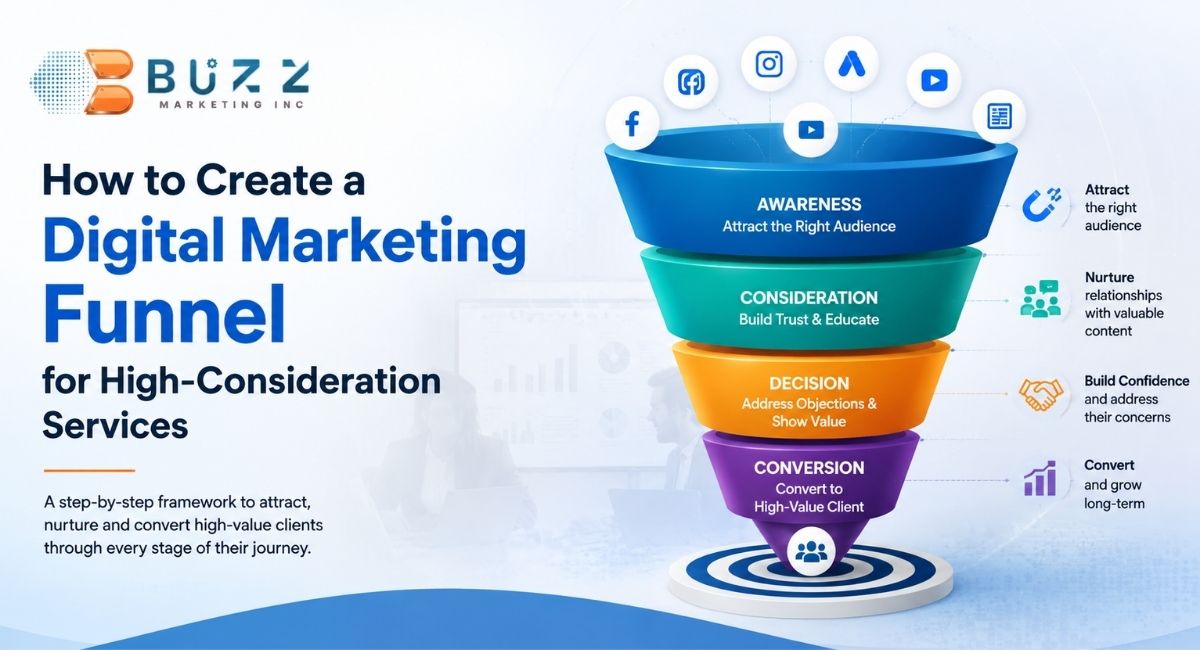
Buzz Marketing’s AI SEO solutions are built around this kind of structural adjustment, helping businesses format existing content so it performs well across both traditional search rankings and newer AI summary formats.
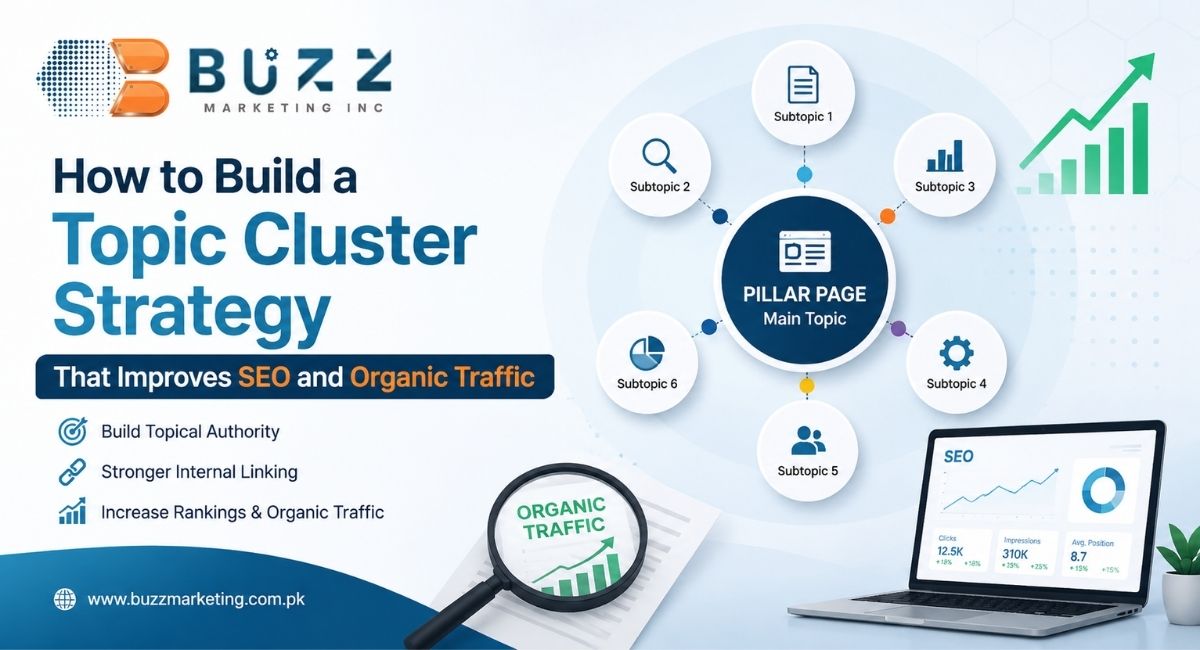
Businesses producing a high volume of content across multiple topics often benefit from organizing that content into structured groups rather than publishing isolated posts. A related approach worth reviewing is a guide on how to build a topic cluster strategy, since a well organized content structure tends to perform better in both regular rankings and zero-click formats, as search engines can more easily identify a page as an authoritative source on a specific subtopic.
Common Mistakes Businesses Make With Zero-Click Search
A few recurring issues limit how well businesses adapt to this shift.
The first is treating declining click through rate as a sign of content failure without checking whether a zero-click feature is now absorbing that query. This leads to unnecessary content overhauls when the real issue is a shift in how the answer is being delivered.
The second is neglecting Google Business Profile because it feels secondary to the website. For many local businesses, this profile now carries more weight in zero-click visibility than any single page on the site.
The third is writing content that never states the direct answer clearly, instead easing into it after several paragraphs of introduction. This structure works against both featured snippet eligibility and AI Overview referencing.
The fourth is ignoring Bing entirely. While Google dominates search volume in most markets including Pakistan, Bing’s growing integration with AI assistants means it can still contribute meaningful zero-click visibility, particularly for business and knowledge panel type queries.
A related issue is inconsistent business information across platforms. When a business address, phone number, or category differs between its website, Google Business Profile, and other directories, search engines have a harder time building a confident entity profile. This inconsistency can quietly limit eligibility for knowledge panels and reduce how often AI Overviews reference the business as a reliable source.
A short list of fixes worth applying across most of these issues:
- Lead every key section with a direct, one or two sentence answer
- Keep Google Business Profile details current after any operational change
- Separate genuine content problems from zero-click feature shifts using Search Console data
- Do not assume Bing traffic is irrelevant without checking its share in analytics
Zero-Click Search: What Pakistani Businesses Need to Know
Does a zero-click search mean the business gets no value from ranking?
No. A zero-click search can still deliver a phone call, a store visit, or brand recognition, even without a website click. The value shifts from a page view to a direct action or an impression that builds familiarity with the brand.
How can I tell if my traffic drop is caused by a zero-click feature?
Check Google Search Console for the affected query. If impressions remain steady or grow while clicks decline, a featured snippet, AI Overview, or another zero-click format is likely absorbing attention that used to go to your listing.
Is Google Business Profile more important than my website for local visibility?
For many local, service based businesses, yes, at least for queries with strong local intent. The profile often appears directly in the local pack, while the website may only get a click from users who want more detail.
Do AI Overviews replace featured snippets entirely?
Not entirely. Both can appear depending on the query type, and Google continues to use featured snippets for many direct factual questions. AI Overviews tend to appear more for broader or multi part questions that benefit from a synthesized answer across sources.
Should small businesses in Pakistan worry about zero-click search yet?
Yes, particularly those relying on local searches for services like healthcare, home repair, food, or retail. Zero-click formats such as the local pack are already a major driver of calls and store visits for these categories, regardless of business size.
Final Thoughts
Search is no longer a simple path from query to click to website visit. A meaningful share of value now gets delivered directly within the search results page, through featured snippets, local packs, knowledge panels, and AI generated summaries. Businesses that keep measuring success only through website traffic will miss a growing part of how customers actually find and choose them.
Adjusting to this shift does not require abandoning traditional SEO. It requires expanding how visibility gets tracked and structuring content so it can be understood and surfaced by both traditional rankings and newer AI driven formats. Buzz Marketing’s SEO audit services can help identify exactly where a business is winning or losing visibility across these formats, so the next steps are based on real data rather than guesswork.